This is still the beginning of our unit on French fairy tales (« Les contes »). Students will analyze narrative text patterns (character, setting, plot, point of view, conflict) and use dialogue to tell their own fairy tale.
Overview
You can refer to the FSL Year-at-a-Glance post for a more in-depth look at our long-range plans for this year. However, here is a brief overview of what we will be doing.
- Language Talks (Études linguistiques): Understanding and using language conventions
- Reading Fiction: Analyzing Narrative Text Patterns
- Writing: Fairy Tales
- Speaking: Deliver Oral Presentations
- Listening: Using Listening Comprehension Strategies and Listening for Meaning
Language Talks / Études linguistiques
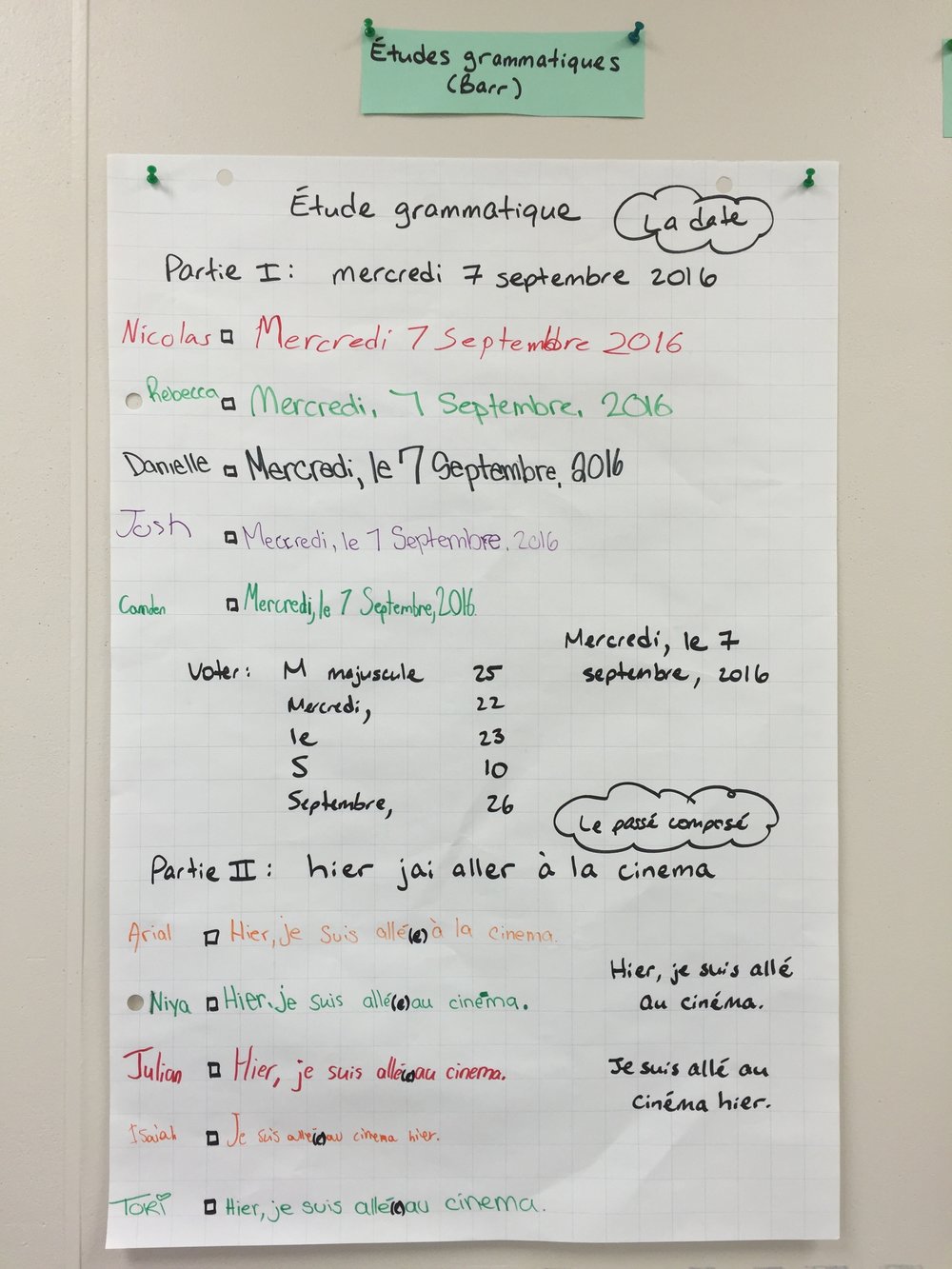
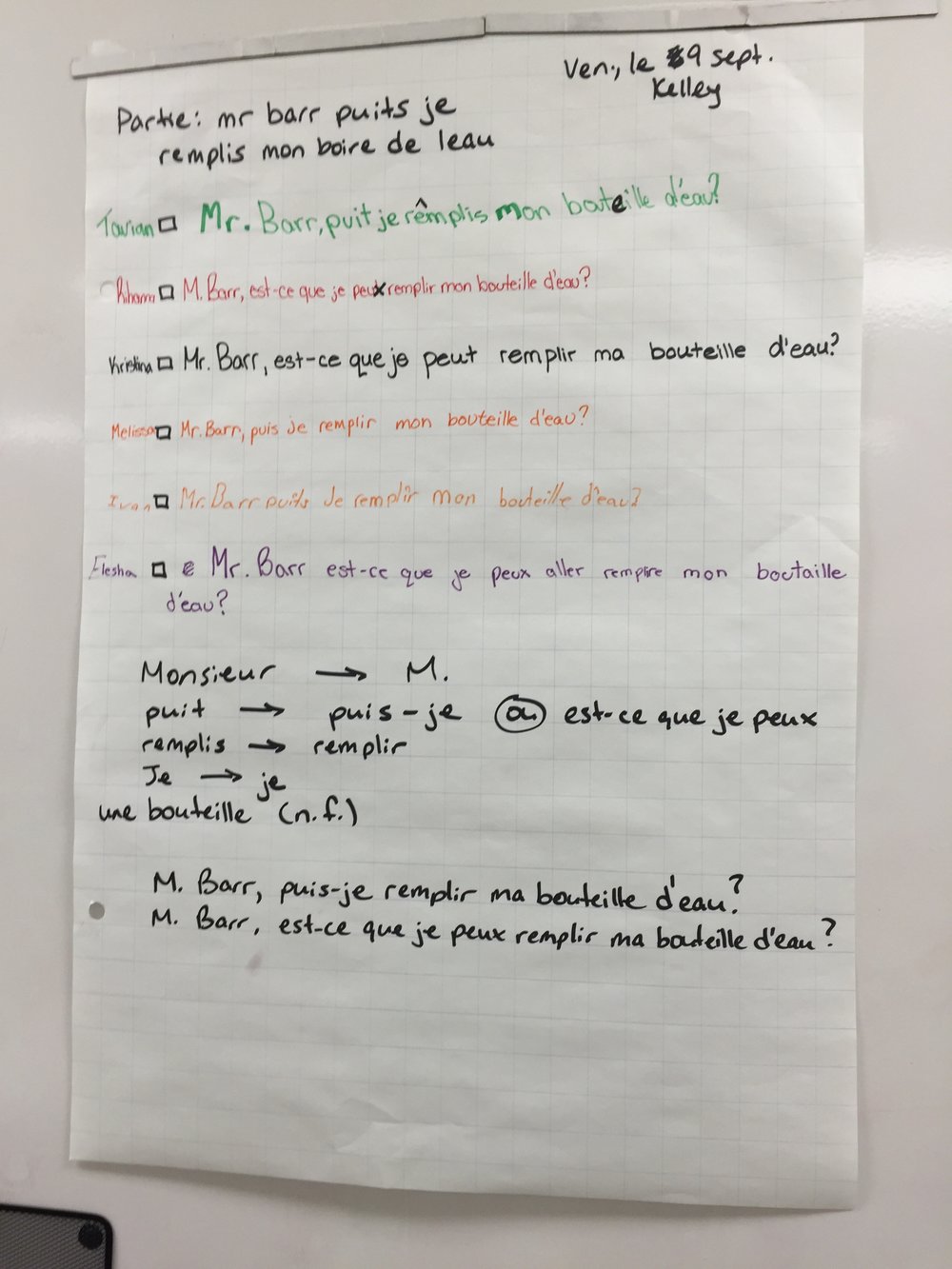
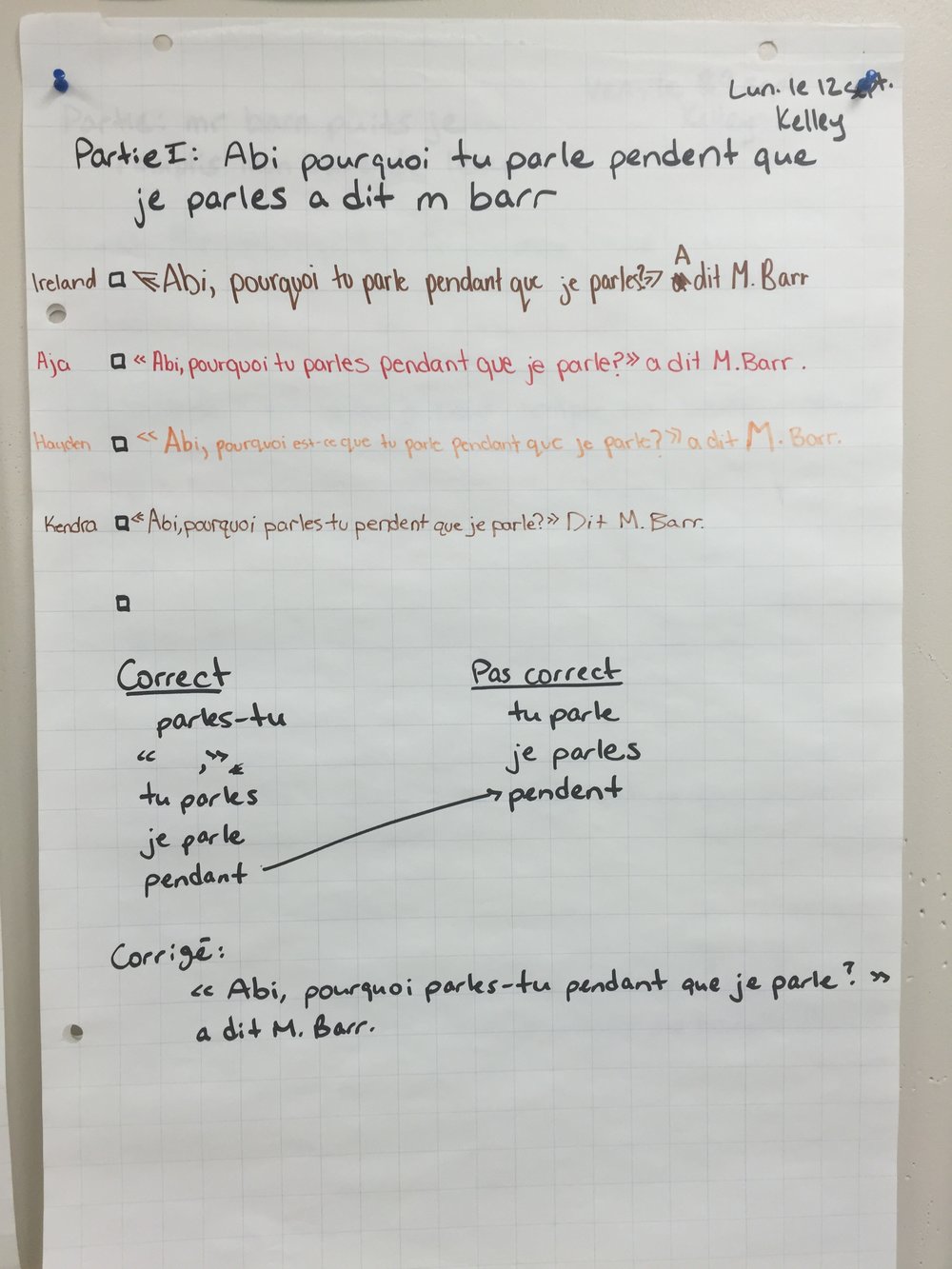
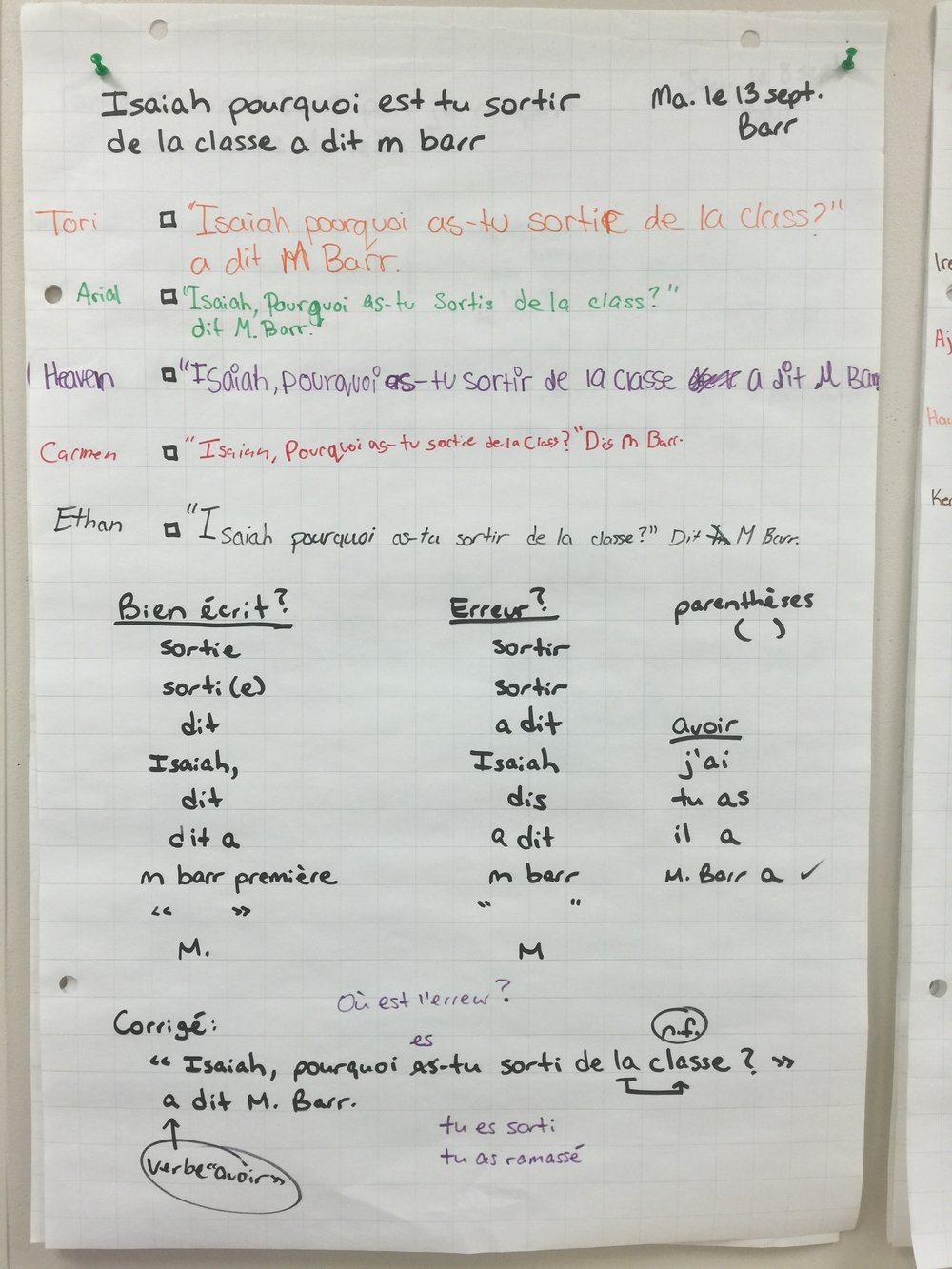
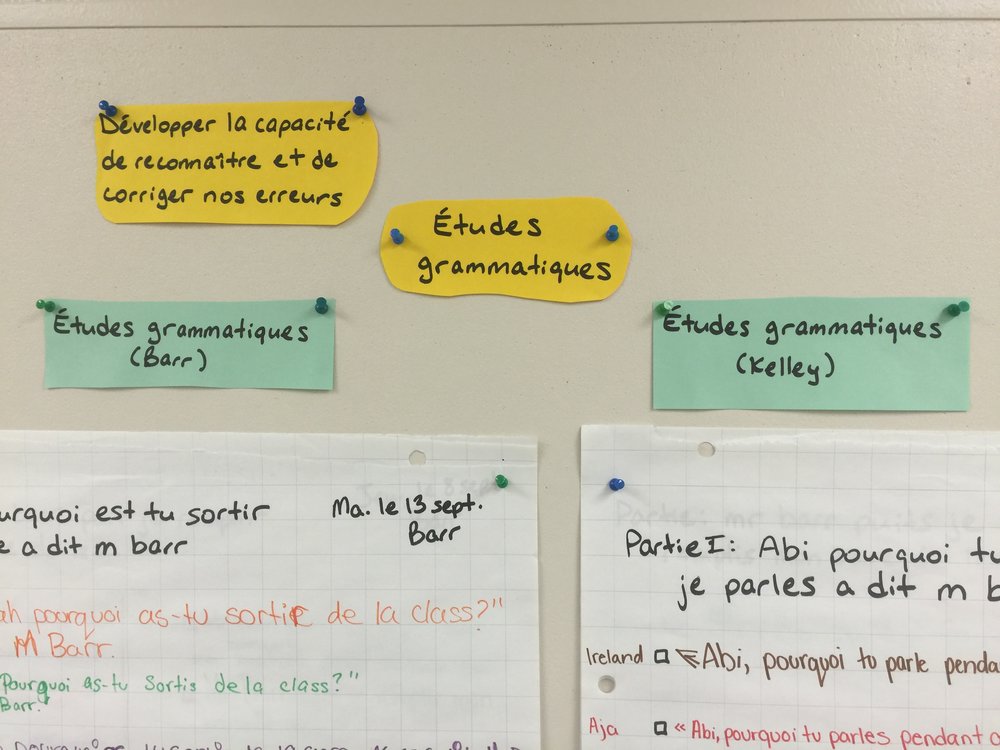
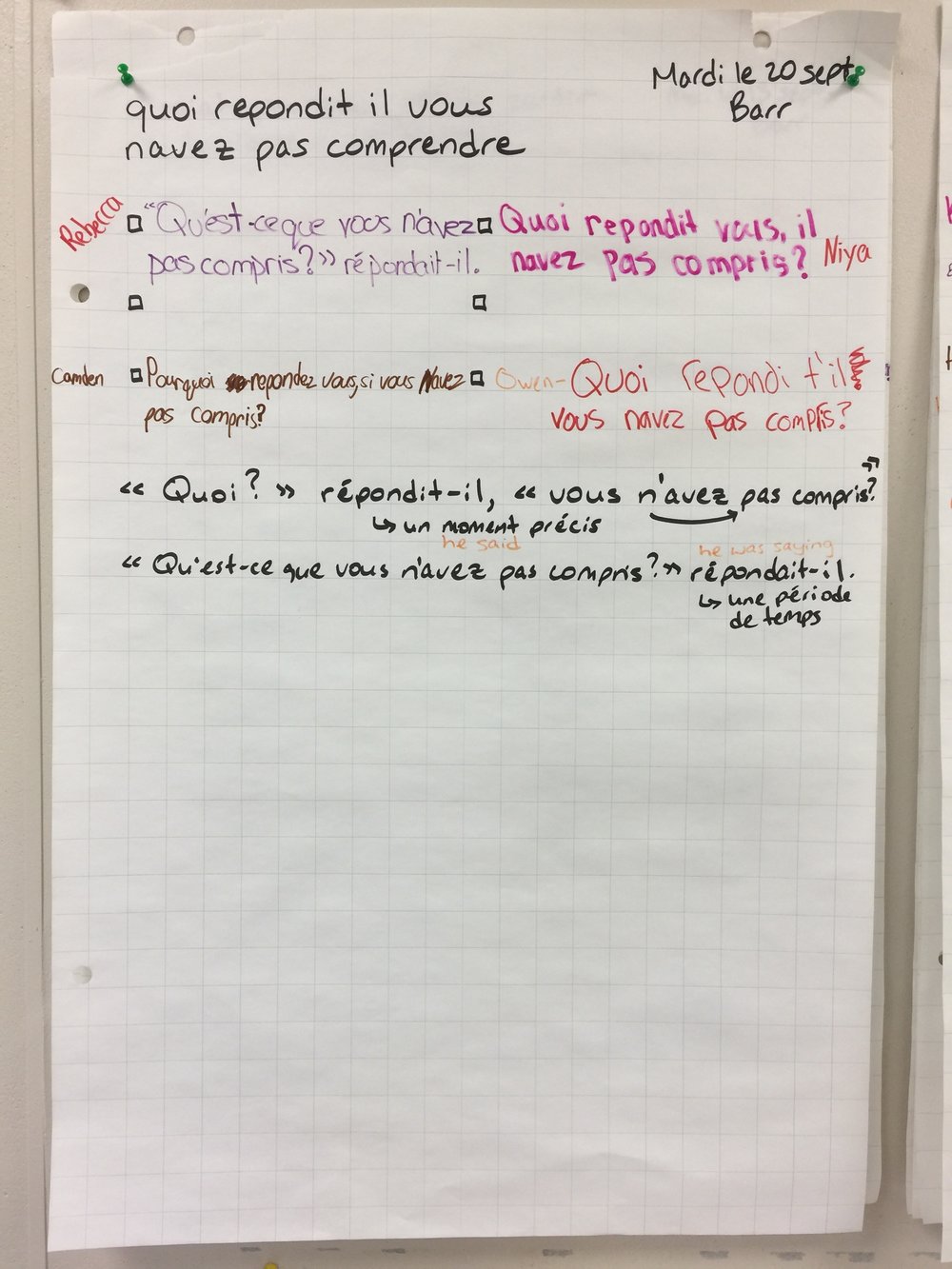
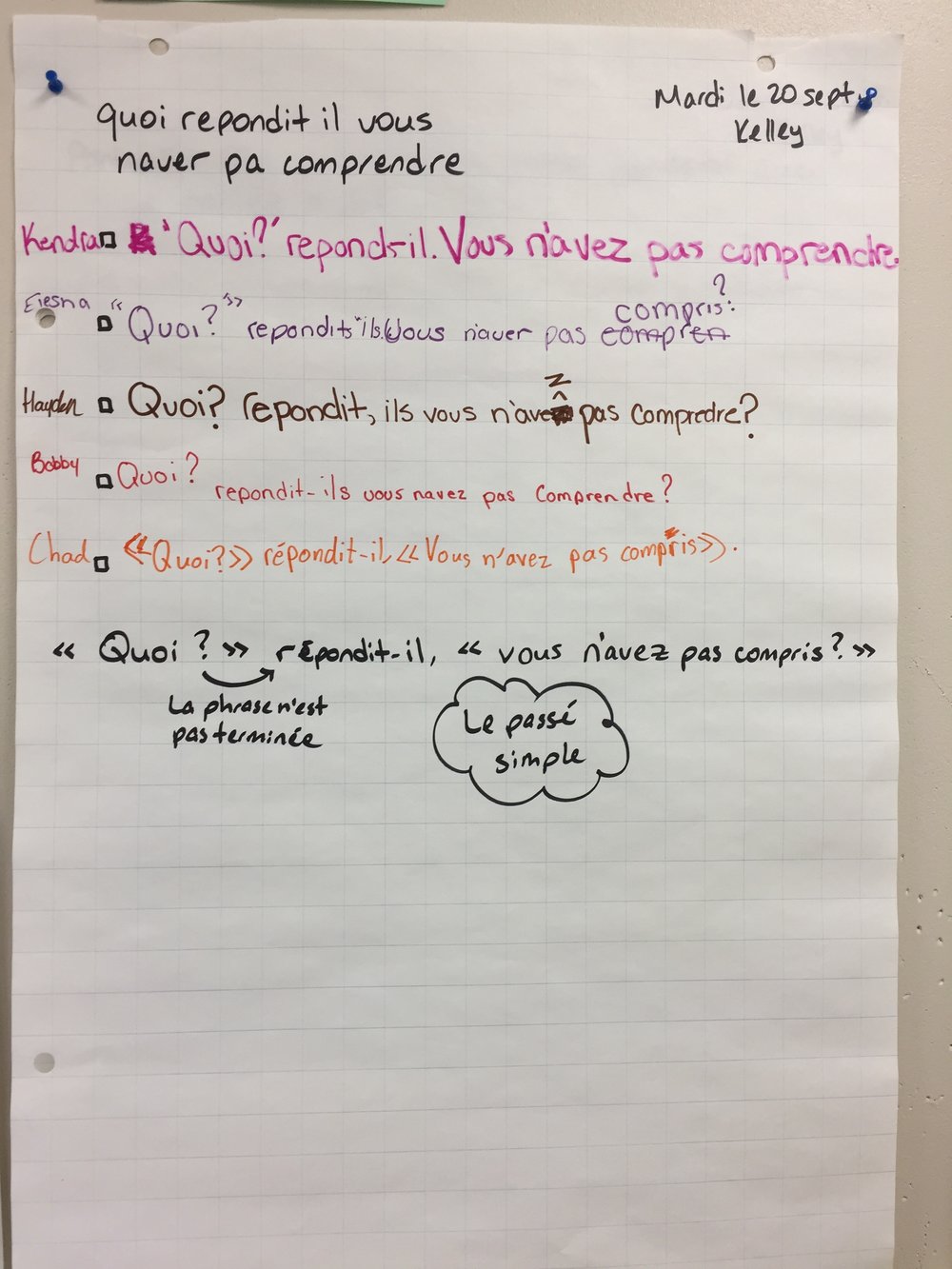
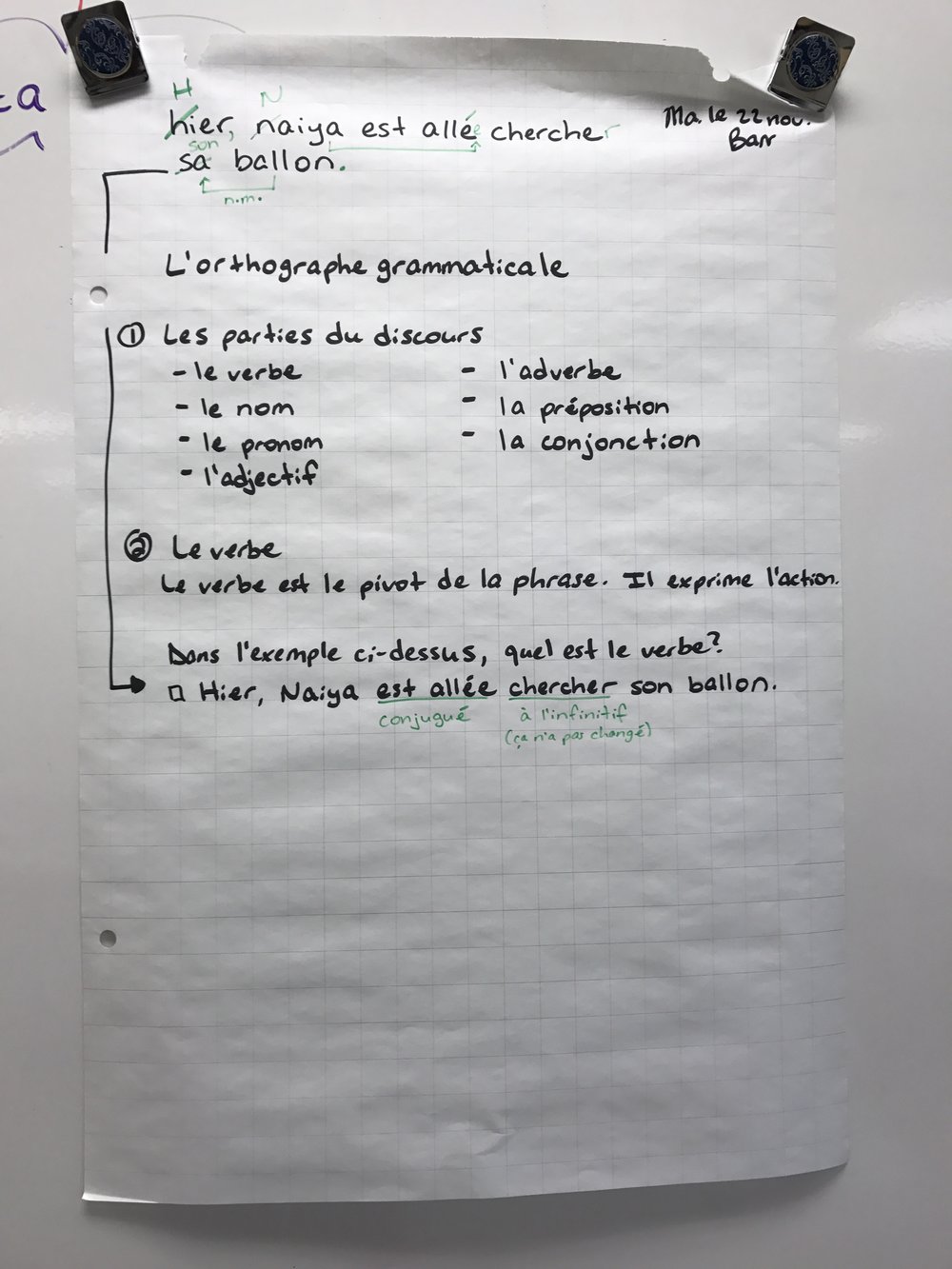
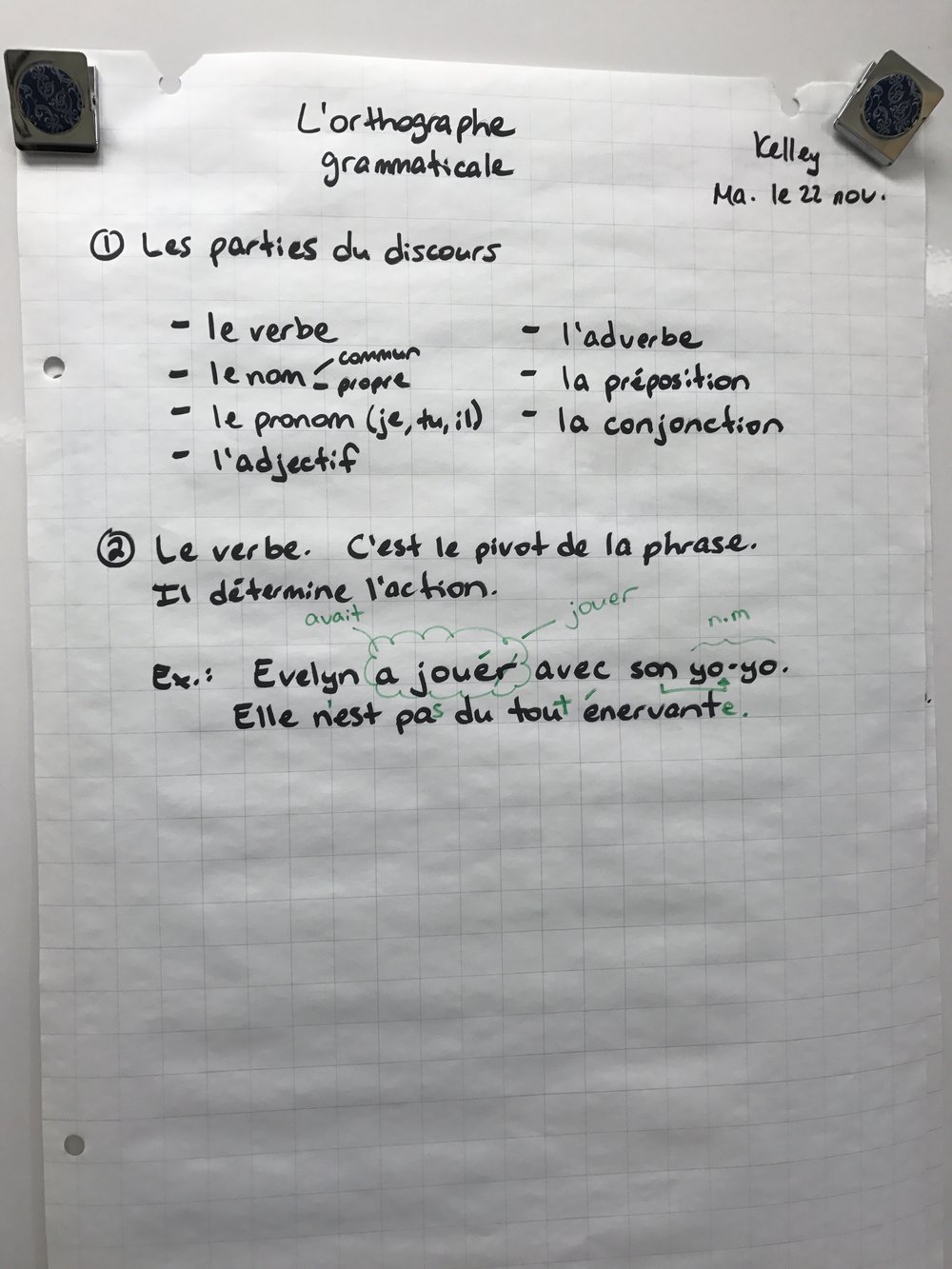
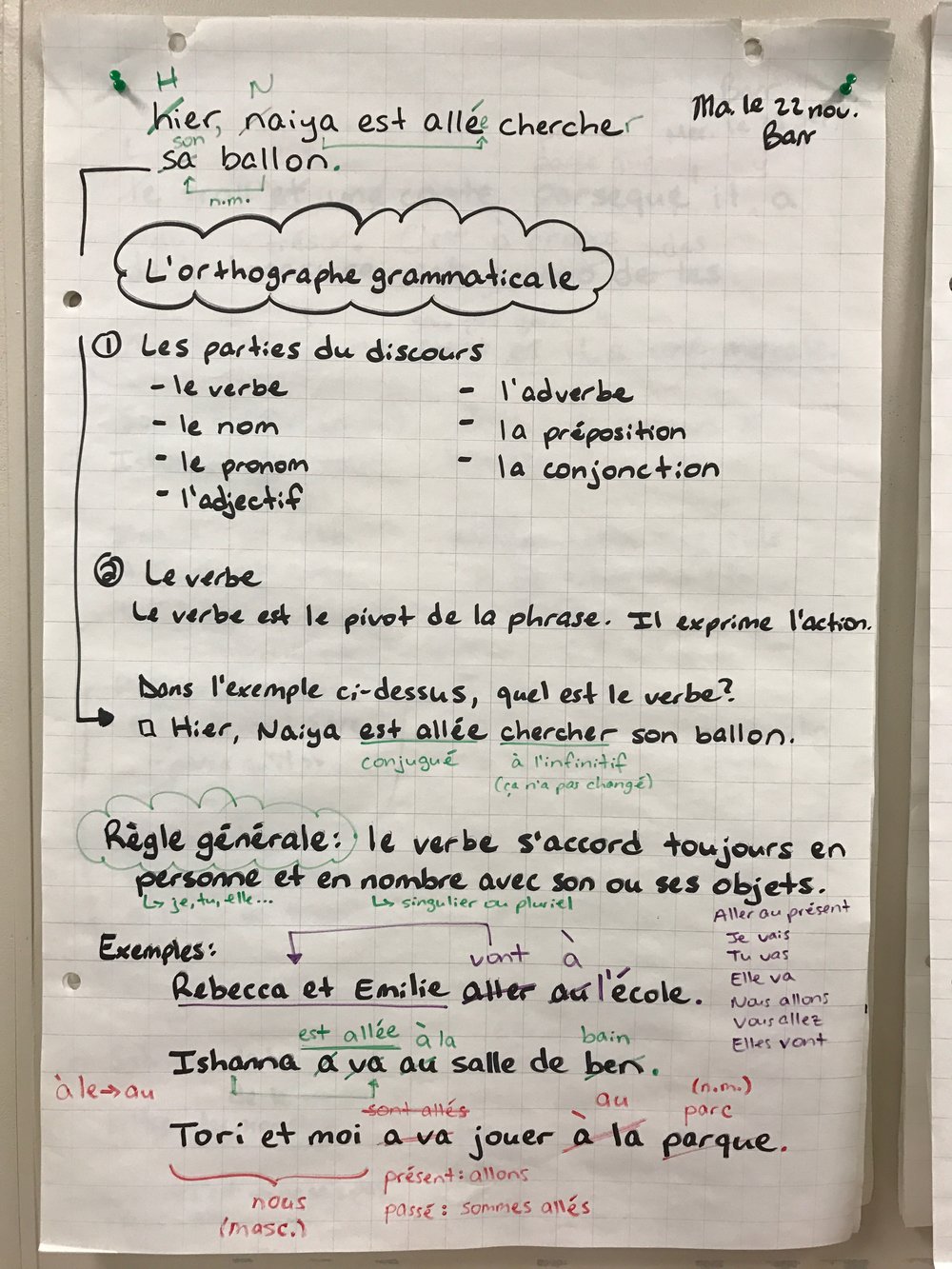
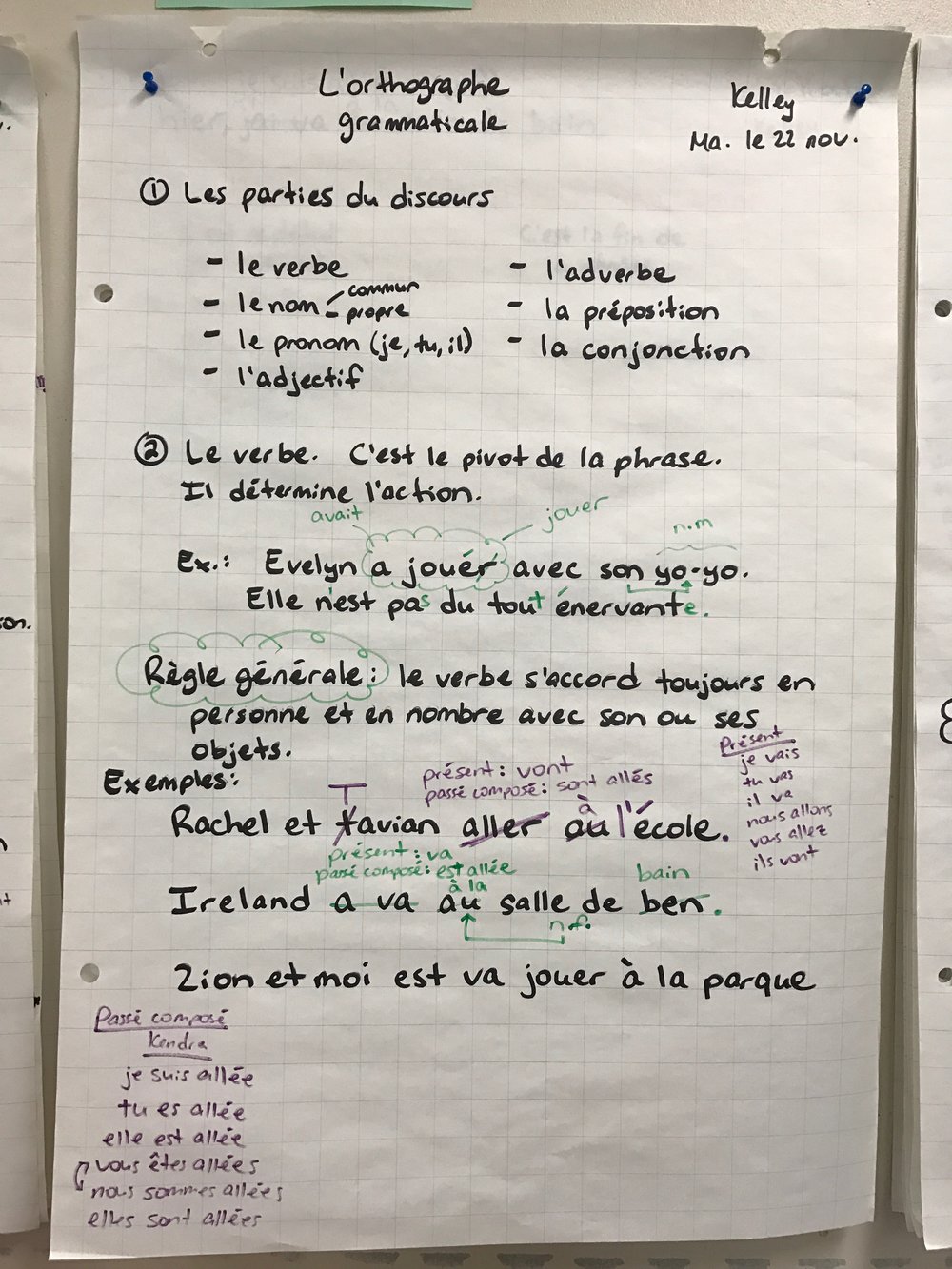
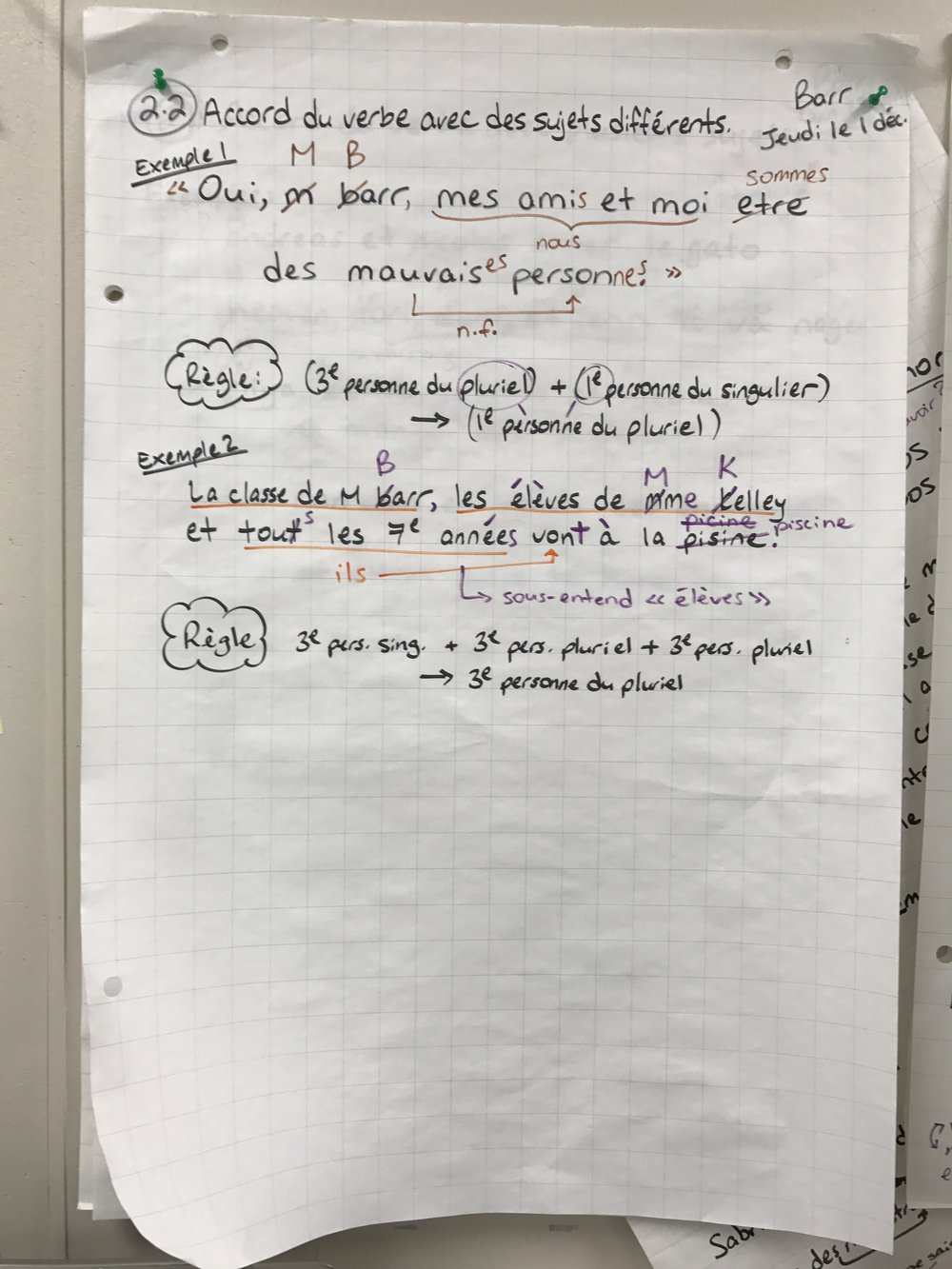
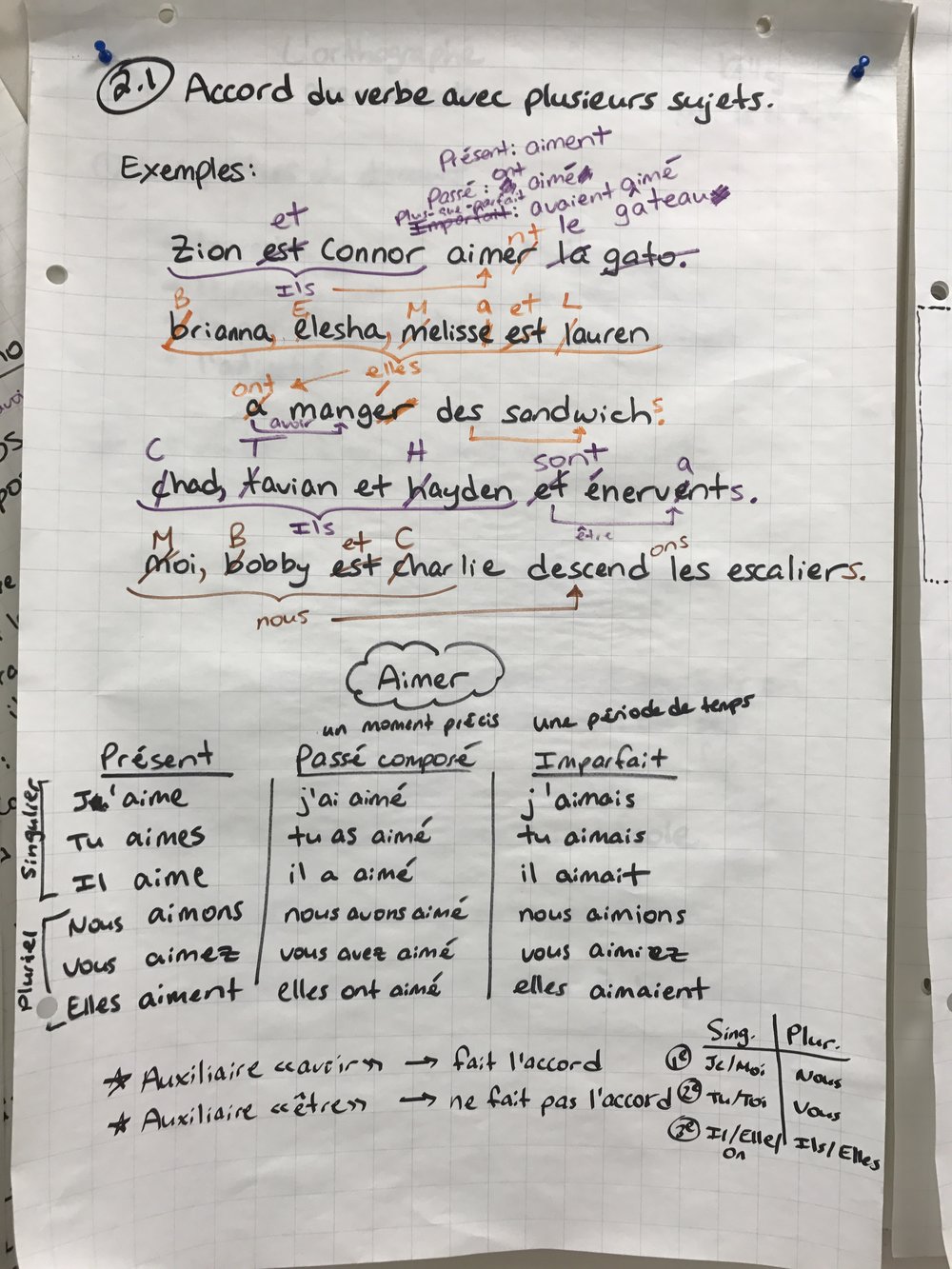
The purpose of French Language Talks is to help students understand the basics of French grammar, punctuation, spelling, verb conjugation, as well as verb and noun agreements. I prefer to do Language Talks instead of worksheets, since the former do a better job mimicking real-life situations. Where a worksheet might give 20 questions that repeat essentially the same skill, a single Language Talk can cover multiple skills simultaneously.
We do Language Talks almost every class. The exception is if that extra twenty minutes of time is absolutely needed for another activity. Over the course of September to December, I hope to cover punctuation, spelling common words, lexical problems, and grammatical spelling of verbs. As I develop a better understanding of what this group of students already knows and what they need to work on, our focus will inevitably shift toward one or two of these concepts.
Here are some examples of the grammar talks we have done so far. One of the cool things about doing Language Talks this way is that I often learn new rules myself. For example, when writing the date, I have always copied the English convention: today's date is Sunday, September 11, 2016. Thus, French, I have always written Dimanche, le 11 septembre, 2016, with commas. As we studied the conventions as a class, we ended up looking up the rule, and it turns out that you never add commas in the date in French (with one exception, detailed in the link).
Reading Fiction: Analyzing Narrative Text Patterns
Over the course of this unit, we read a number of fairy tales in French and tried to identify any common themes.

Writing: Fairy Tales
These are our graphic organizer models for how to plan a fairy tale.
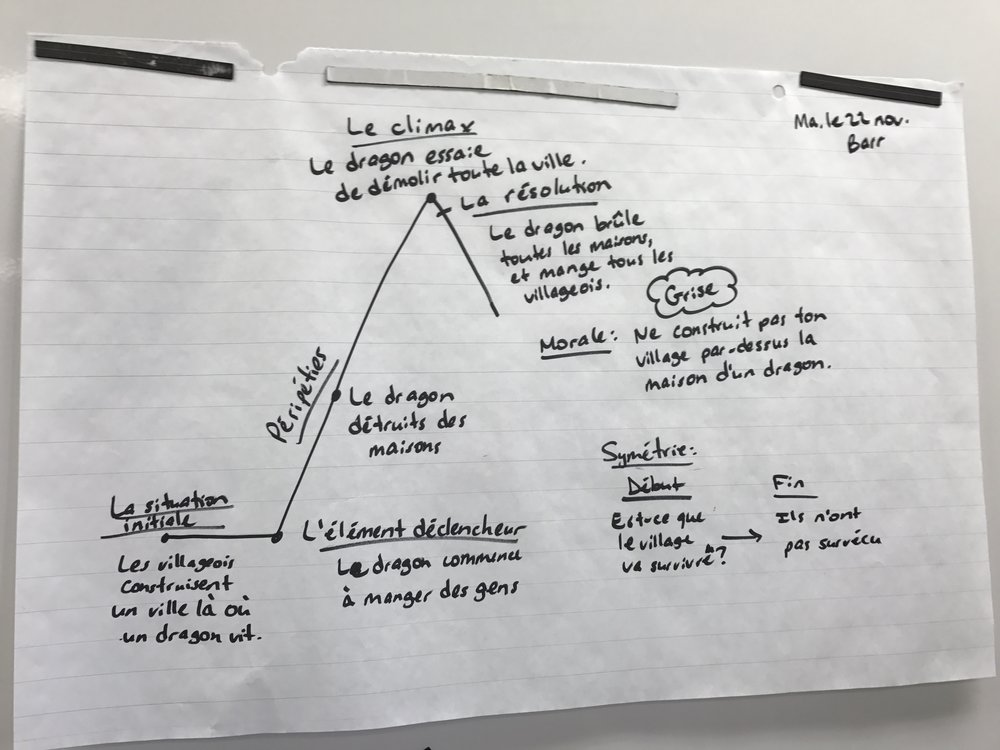
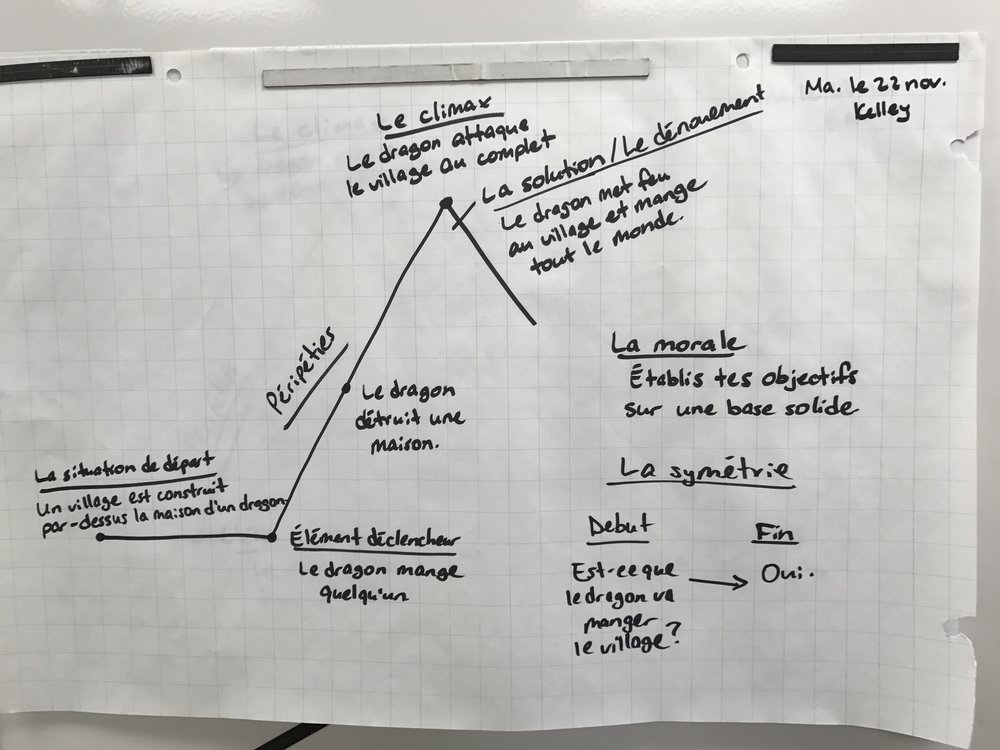
And here is the evaluation, with success criteria. All of the fairy tales we have read in class are also available to use as models.
Download as PDF (printable): 2016-11-22-ecrire-un-conte [file unavailable]
Download for Word (editable): 2016-11-22-ecrire-un-conte [file unavailable]

Speaking: Delivering Oral Presentations
[We haven’t started this yet. Watch this space for updates.]
Listening: Using Listening Oral Comprehension Strategies and Listening for Meaning
[We haven’t started this yet. Watch this space for updates.]